

Are Two Always Better Than One?
Evaluating the Benefits of Two Hearing Aids Versus One Hearing Aid in Patients with Age-Related Hearing Loss

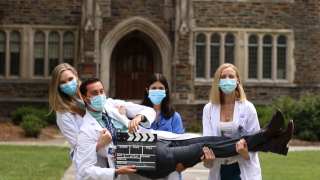
Residency Recruitment in the Age of COVID-19
Nationwide, residency programs faced the same dilemma in 2020: how can a program truly engage applicants and offer candidates an authentic representation of the resident experience when recruiting must take place entirely through a computer screen?

Publications in 2020
Publications in Journals With an Impact Factor of 10.0 or Greater and Publications in Journals With an Impact Factor of 3.0-10.0
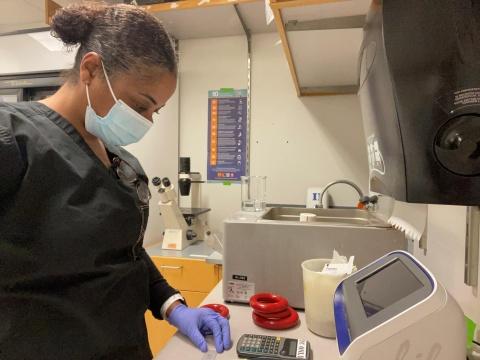
From Division to Department: Research Growth in Head and Neck Surgery & Communication Sciences
Head and Neck Surgery & Communication Sciences transitioned from a division to an independent department in 2019. A key aspect of the strategic plan for the new department has involved clinician–scientist recruitment to continue the department’s mission of “advancing and sharing knowledge in the field.”


Congenital CMV: What You Need to Know
Anticipation. It is the most felt emotion on the way to labor and delivery. This little bundle of joy has been talked about, prayed over, sung, and read to as soon as the family knew it was on the way. Finally, the big day and all is well—until “What, wait, say that again? Did we hear this correctly?”

Research Team Examines the Impact of Face Coverings on Communication and Health Outcomes
Hearing loss is a common source of disability that can lead to poor speech perception and an increased reliance on lip-reading.
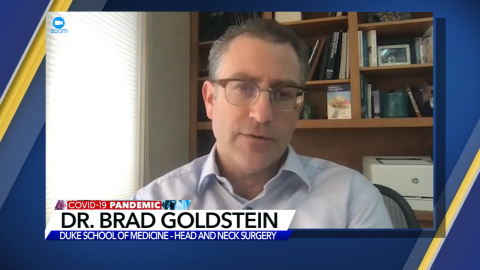
COVID-19 Research by Dr. Brad Goldstein Featured on ABC11 News
ABC11 News recently interviewed Dr. Brad Goldstein, Vice Chair of Research in the Department of Head and Neck Surgery & Communication Sciences, about a research collaboration at Duke that aims to determine why certain patients infected with COVID-19 develop long-term loss of taste and smell. Even 5-6 months after recovering from the infection, approximately 15% of patients report this lingering symptom.

One Year of a Pandemic: Fostering a New Department While Fighting COVID-19
As members of a new department, faculty and staff in the Department of Head and Neck Surgery & Communication Sciences eagerly anticipated rapid progress and development throughout 2020 in becom