
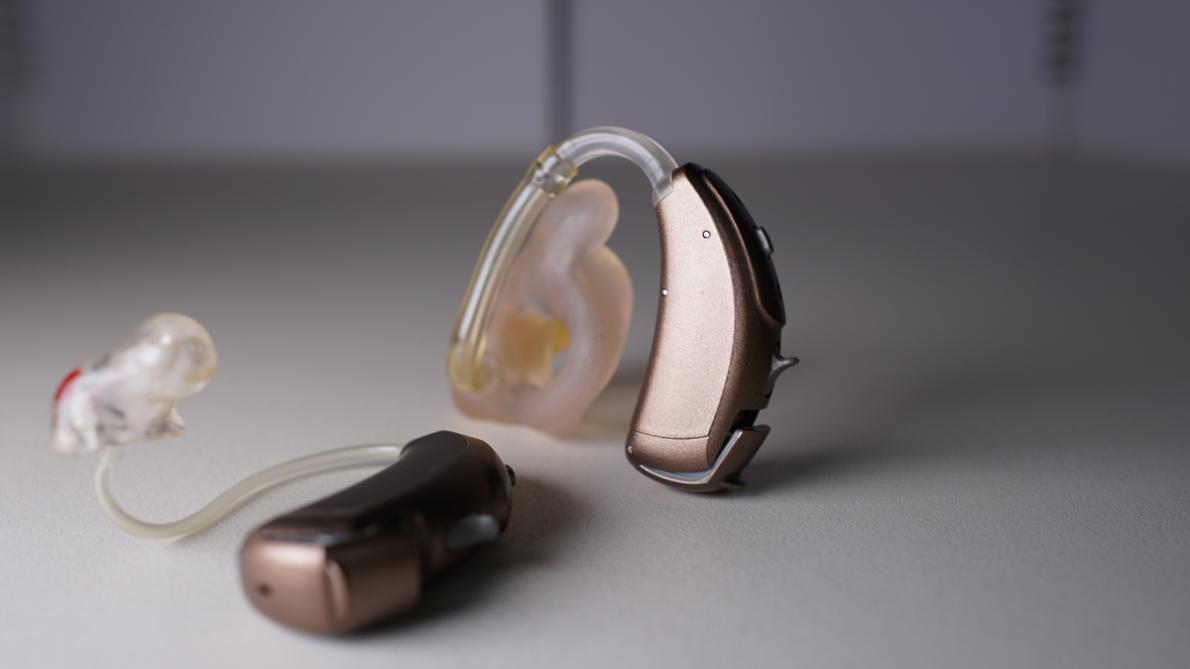
When visiting their provider, an older adult with age-related hearing loss may have a common question: Do I need two hearing aids, or is one enough?
Researchers at Duke set out to help patients and their providers make that decision.
In a study published in JAMA Otolaryngology-Head & Neck Surgery, a team led by Duke audiologist Sherri L. Smith, AuD, PhD, CCC-A, found that people who received two hearing aids reported greater benefit on average than those who received one. However, both groups experienced improvements, suggesting that one hearing aid may be a meaningful option for some patients.
The study included 275 adults age 50 and older with age-related hearing loss who were seeking hearing aids. Participants were enrolled through audiology clinics at Duke University Health System and Vanderbilt University and randomly assigned to receive either one hearing aid or two. Researchers measured participants' self-reported hearing aid benefit after three months.
The results showed that both groups reported hearing aid benefit. Those who were fitted with two hearing aids, however, experienced significantly more benefit compared to the group that was fitted with one hearing aid.
“This is an important real-world question, as patients must balance the benefits to communication and quality of life with cost and convenience when deciding whether to purchase one or two hearing aids,” said Smith, associate professor and chief of audiology in the Duke Department of Head & Neck Surgery and Communication Sciences.
She said evidence to guide decisions about whether patients with age-related hearing loss should use one or two hearing aids has been limited. Previous studies have often involved small sample sizes and older hearing aid technology. Smith and her team sought to address those limitations by using a large sample size and modern technology.
Also, in prior studies, participants were provided hearing aids at no cost. To more closely reflect the decisions patients face in clinical practice, in this current study, patients paid for their devices just as they would in most clinical settings.
While the study showed that two hearing aids provide more improvements compared to one hearing aid for the treatment of age-related hearing loss on average, Smith said it is important to note that one hearing aid can still provide meaningful improvement for some people. The results can help inform conversations between patients and audiologists, but Smith said more research is needed before a standard recommendation can be made about fitting one or two hearing aids.
Next, the researchers hope to explore how to predict which patients would likely benefit from one hearing aid and who would benefit more from two. That information could ultimately help patients and clinicians make better informed decisions about hearing care.
Funding: Patient-Centered Outcomes Research Institute and the National Center for Advancing Translational Sciences, a component of the National Institutes of Health.
Other Duke authors: Kayla W. Kilpatrick, Rebecca North, Janet P. Bettger, Theresa Coles, Sarah B. Peskoe, Howard W. Francis, Heather Toth, William Dillon, Laura Thompson, Amy Walker, and Frank W. Rockhold.